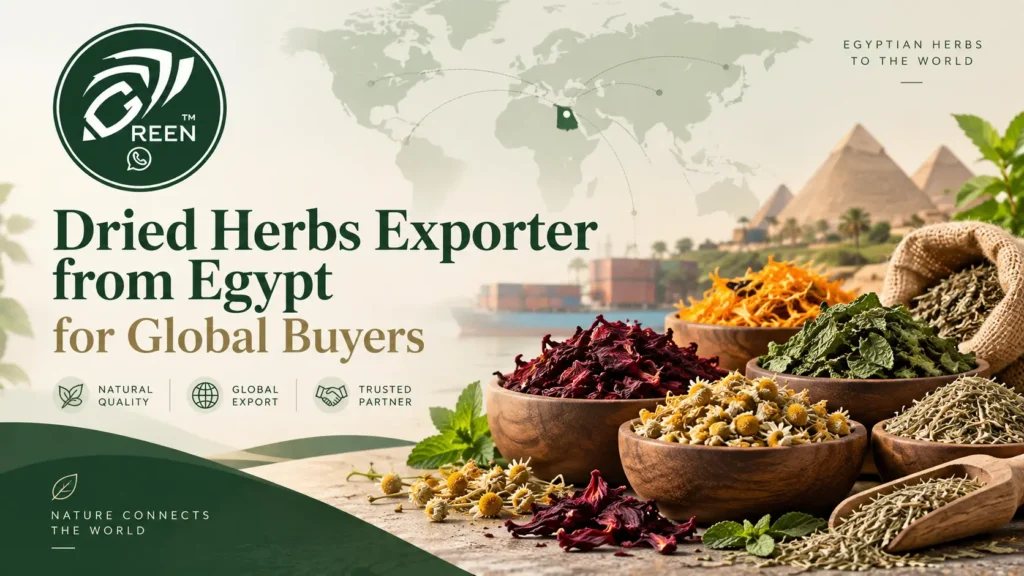
Dried Herbs Exporter from Egypt for Global Buyers
Finding a reliable dried herbs exporter from Egypt for global buyers is not only about knowing the product price. Importers, distributors, food manufacturers, and brands need a supplier capable of providing consistent quality, suitable processing, professional packaging, clear product traceability, and export-ready shipments for international markets.
Egypt is well known for producing a wide range of herbs, spices, and natural botanical ingredients used in food manufacturing, beverages, herbal teas, seasoning blends, and many other applications.
However, crop quality alone is not enough.
International buyers also need to understand how herbs are cultivated, harvested, dried, processed, tested, packed, and prepared before reaching the destination market.
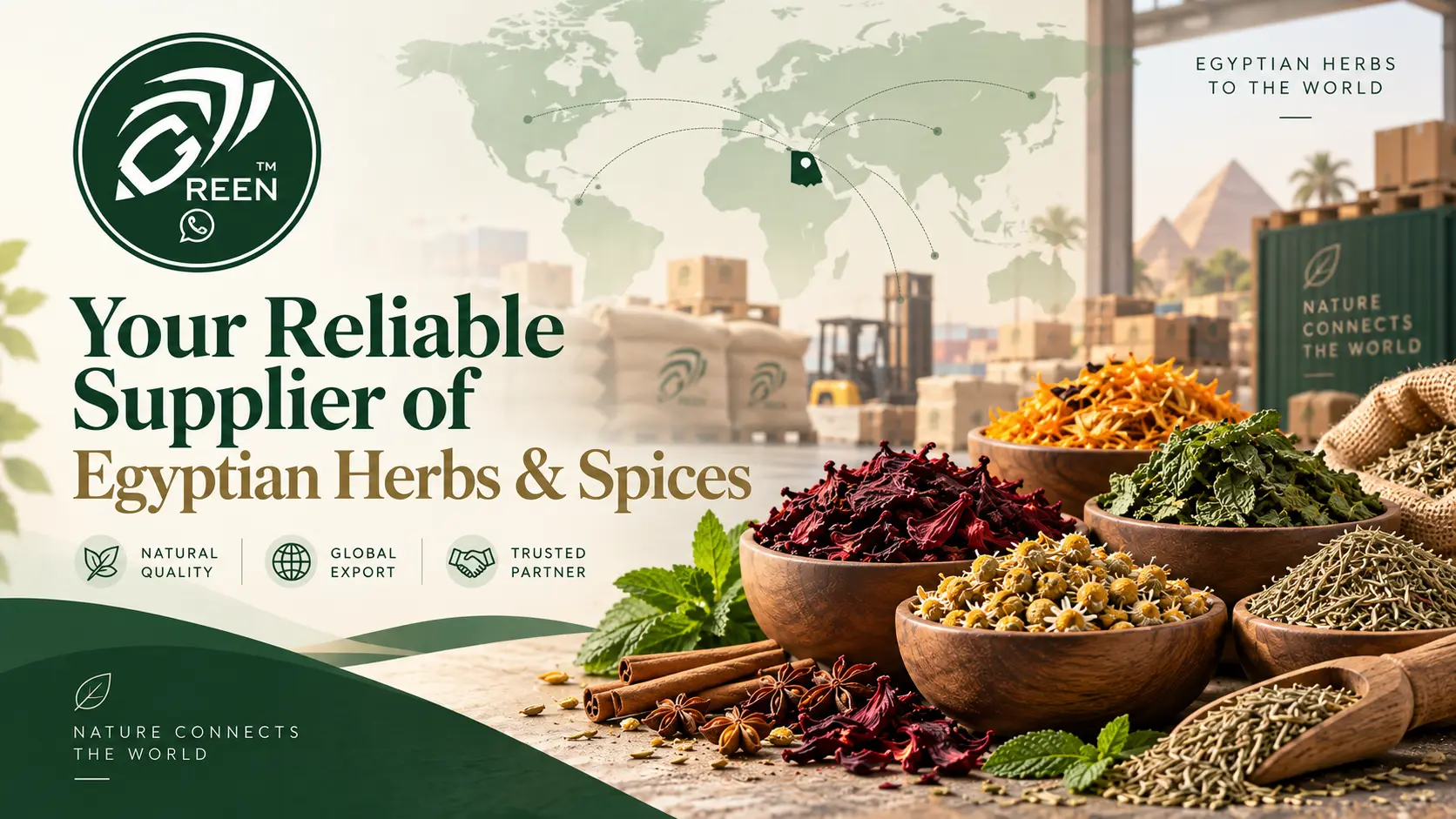
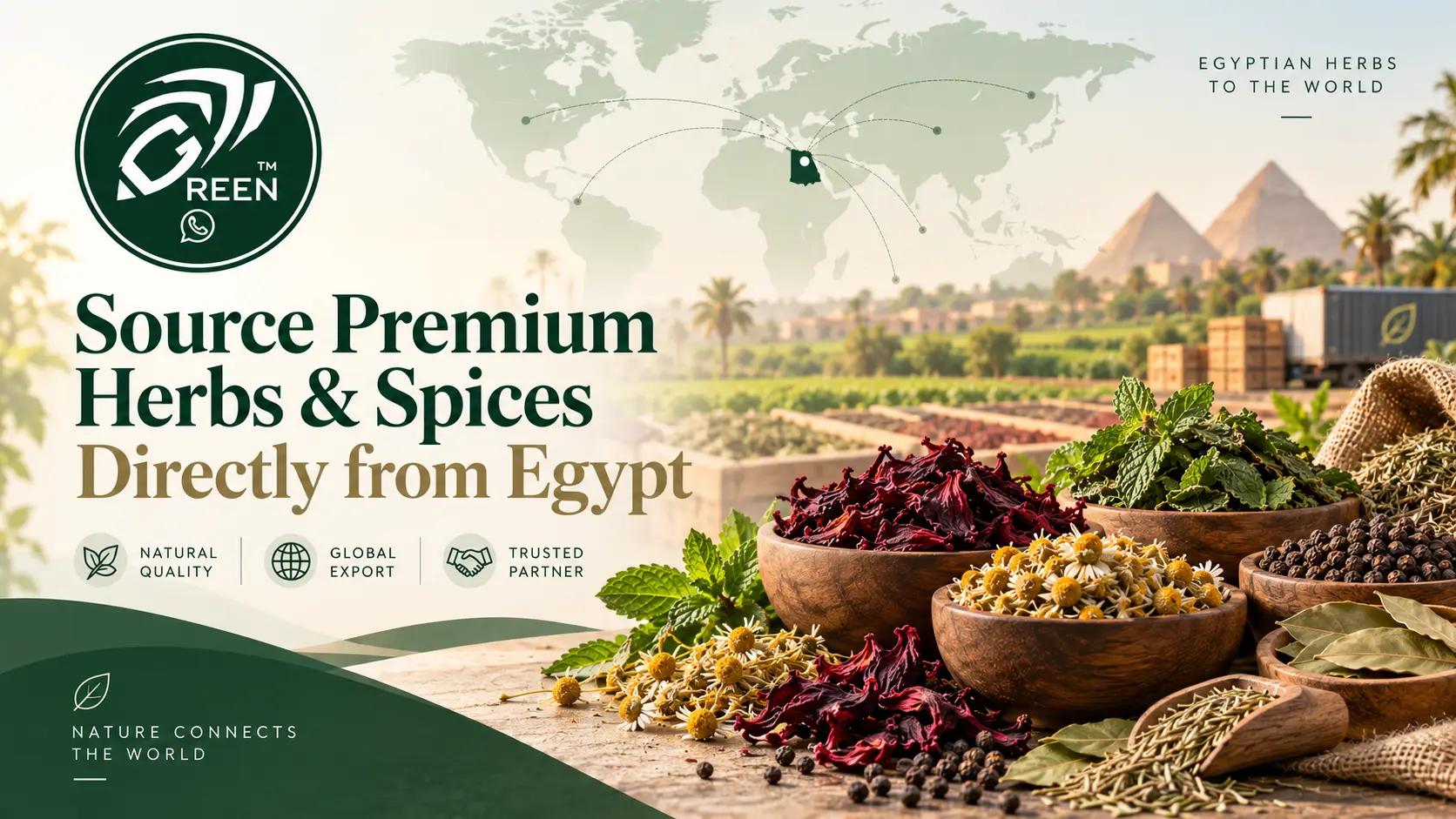
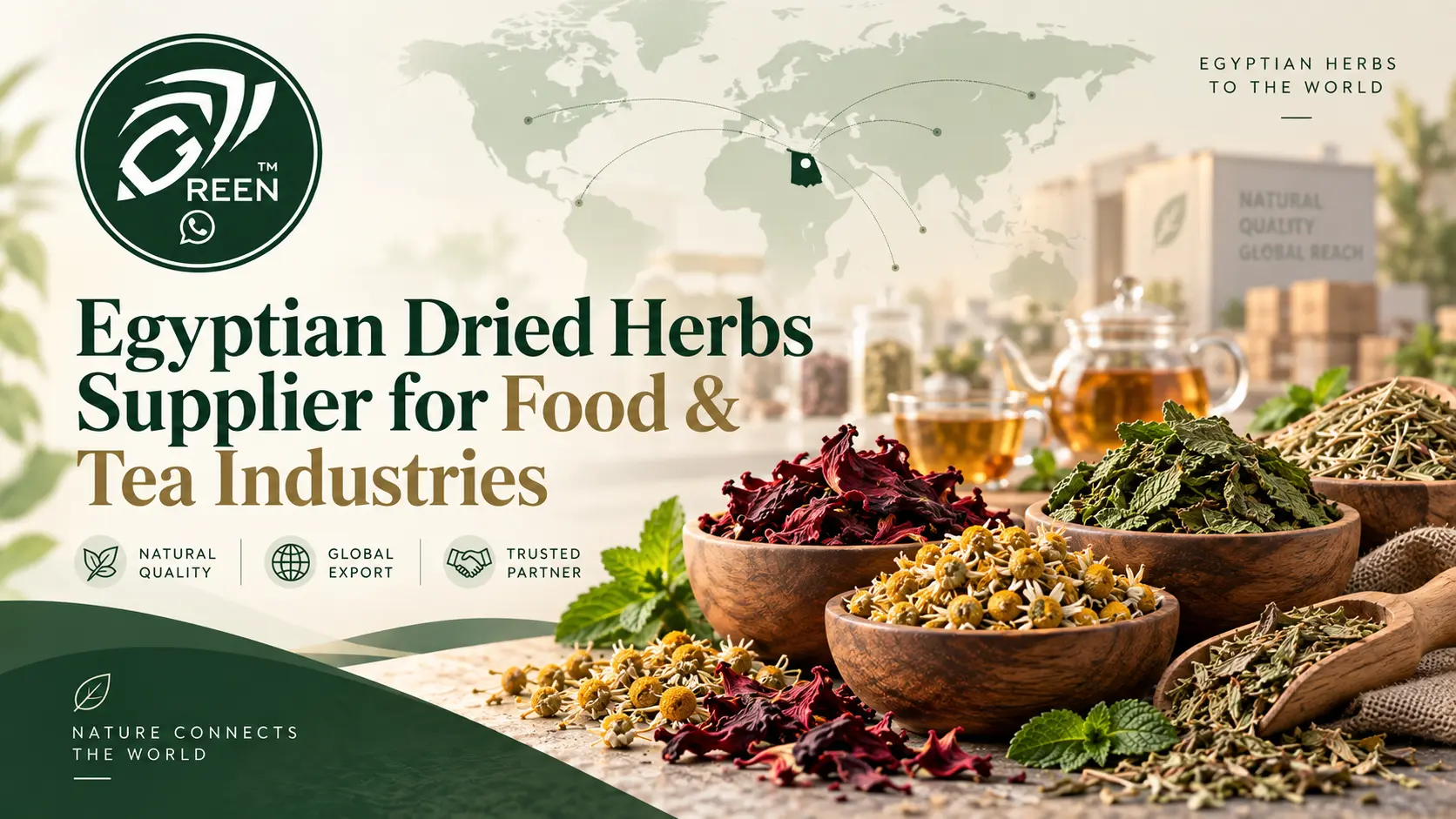
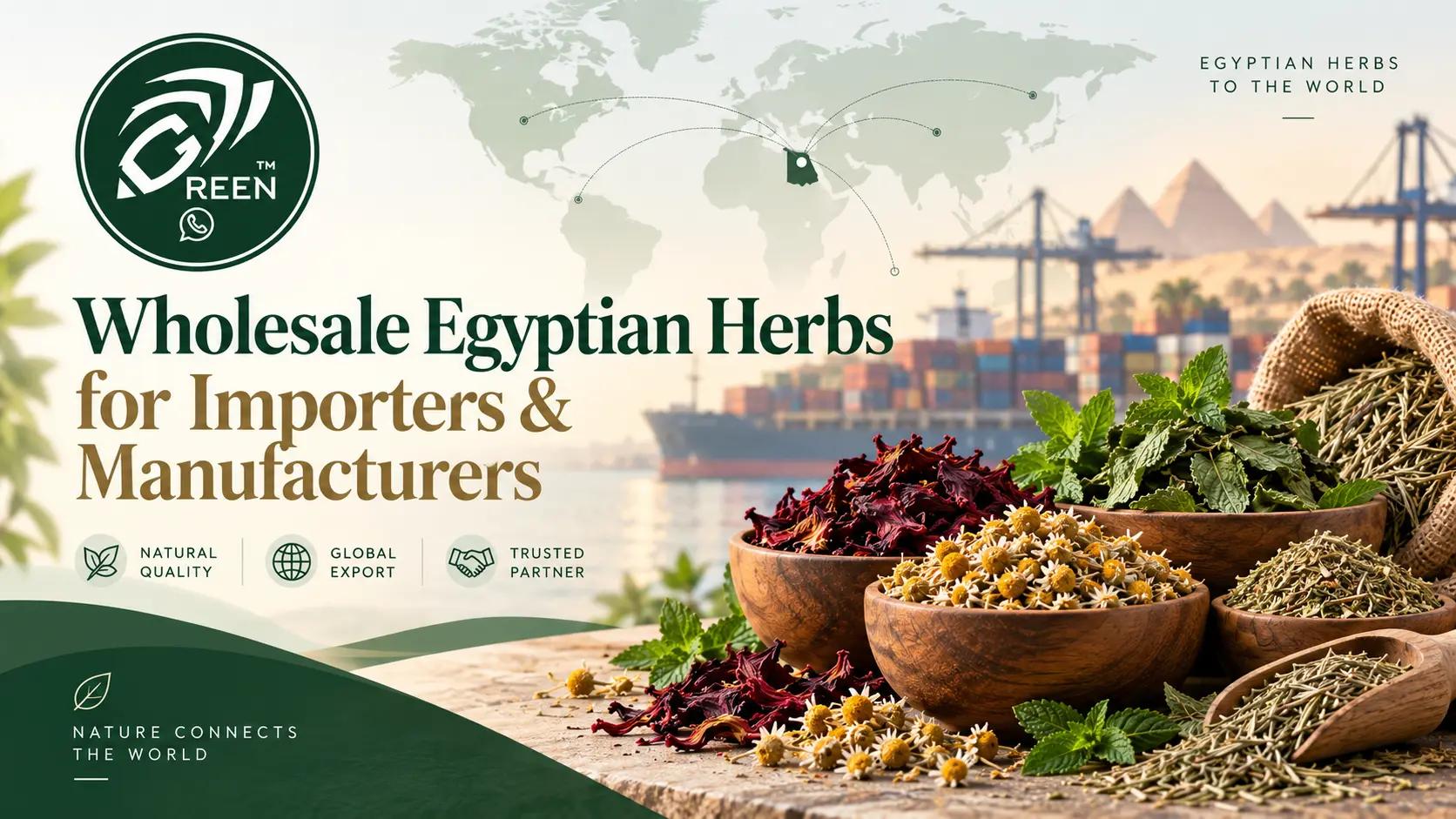
Green Company has been working in the herbs and spices sector since 1919, with experience extending across four generations. The company operates through an integrated system that begins at the agricultural source and continues through processing, quality control, packaging, traceability, and export to global markets.
Why Do Companies Import Dried Herbs from Egypt?
Egypt offers favorable agricultural conditions for producing a wide variety of herbs, spices, and botanical ingredients.
Egyptian dried herbs are used across many sectors, including:
Food manufacturing.
Seasoning production.
Herbal tea and beverage production.
Hotels and restaurants.
Sauce manufacturing.
Ready meals.
Packaged food products.
Private-label products.
Natural ingredient manufacturing.
International buyers usually look for suppliers capable of delivering the required products in suitable quantities and specifications while maintaining consistent quality.
What Do International Buyers Need from a Dried Herbs Exporter?
Choosing a supplier is not only about the product itself.
B2B buyers evaluate several important factors, including:
Product quality.
Consistency of specifications.
Processing capabilities.
Traceability.
Packaging options.
Production capacity.
Export documentation.
Professional communication.
Shipping organization.
Ability to support repeat orders.
All these elements help importers build a more stable and reliable supply chain.
Dried Herbs for Food Manufacturers
Food manufacturers use dried herbs as ingredients in their production processes.
They may be used in:
Seasoning blends.
Sauces.
Soups.
Ready meals.
Meat products.
Bakery products.
Snack seasonings.
Pickled products.
Processed foods.
For these buyers, maintaining consistent product characteristics from one batch to another is essential.
Dried Herbs for Importers
Importers usually purchase commercial quantities and distribute them within their target markets.
They may supply:
Food manufacturers.
Wholesalers.
Distributors.
Brands.
Restaurants.
Packing companies.
Retailers.
This means importers need suppliers capable of handling commercial volumes, packaging requirements, preparation, and international shipping.
Dried Herbs for Distributors
Distributors often require a variety of products instead of sourcing only one herb.
Working with a supplier that can provide multiple herbs and spices through the same supply chain can simplify purchasing.
It can also reduce the number of suppliers that need to be managed and improve procurement organization.
Herbs for Private-Label Brands
Private-label companies may need additional services beyond raw herb supply.
These can include:
Product selection.
Processing.
Drying.
Custom blending.
Packaging.
Different pack sizes.
Export preparation.
Green Company provides herbs, spices, processing, packaging, and customized blends to support different business requirements.
Main Egyptian Dried Herbs for Export
Egypt produces many types of herbs suitable for international markets.
Green Company offers a range of products for importers, food manufacturers, and distributors.
Dried Basil
Basil is widely used in food manufacturing.
It can be used in:
Sauces.
Seasoning blends.
Pasta products.
Pizza seasonings.
Marinades.
Processed foods.
Ready meals.
Buyers commonly evaluate its color, aroma, cleanliness, cut size, and consistency.
Dried Marjoram
Marjoram is an important Mediterranean herb.
It is used in:
Seasoning blends.
Food manufacturing.
Prepared foods.
Meat seasonings.
Sauces.
Other savory applications.
Natural aroma, color, and suitable drying are important factors when evaluating marjoram quality.
Dried Parsley
Dried parsley is used in many food products.
These include:
Soups.
Sauces.
Dry mixes.
Ready meals.
Vegetable blends.
Seasonings.
Processed foods.
Green Company supplies different parsley products within its portfolio.
Dried Dill
Dill is widely used in food manufacturing.
Applications may include:
Sauces.
Pickled products.
Seasoning blends.
Food marinades.
Prepared foods.
The required product format may vary depending on the buyer’s application.
Dried Cilantro
Cilantro is used in many seasoning blends, sauces, and marinades.
International buyers often focus on maintaining its natural aroma during drying, processing, and storage.
Dried Lemongrass
Lemongrass is used in:
Herbal teas.
Beverages.
Botanical blends.
Seasonings.
Sauces.
Other food applications.
It is known for its characteristic citrus aroma.
Dried Molokhia
Molokhia is a well-known Egyptian agricultural product with strong demand in regional markets.
It can be supplied to distributors, importers, brands, and food manufacturers according to the requirements of each market.
Egyptian Hibiscus
Hibiscus is one of the Egyptian products commonly demanded in international markets.
It is used in:
Herbal beverages.
Tea.
Cold drinks.
Extracts.
Botanical blends.
Food applications.
Buyers often evaluate color, appearance, cleanliness, and drying quality.
Egyptian Chamomile
Chamomile is used in:
Herbal tea.
Botanical blends.
Hot beverages.
Extracts.
Natural products.
Aroma, appearance, and flower quality are important factors for buyers.
Calendula Flowers
Calendula can be used in herbal teas, botanical blends, extracts, and natural applications.
Maintaining its natural appearance and color during processing is particularly important.
How Does Dried Herb Production Begin?
Herbs prepared for export pass through several stages.
The process does not begin at packaging or shipping.
It starts with selecting the right crop and agricultural material.
Green Company operates through a supply chain covering multiple stages from agriculture to the international market.
Seed Selection
The process begins with selecting suitable seeds or plant varieties.
Seed selection may affect:
Crop quality.
Yield.
Aroma.
Color.
Flavor.
Final product characteristics.
Cultivation
Once seeds are selected, cultivation begins.
Herbs need appropriate agricultural management throughout their growing cycle to produce crops suitable for processing and export.
Harvesting
Plants are harvested at the appropriate stage according to the crop type.
Harvest timing can influence:
Color.
Aroma.
Texture.
Final product quality.
Drying the Herbs
Drying is one of the most important stages in herb production.
It reduces moisture and prepares the product for storage, processing, and packaging.
However, drying is not simply about removing water from the plant.
The process should also help preserve:
Natural color.
Aroma.
Aromatic characteristics.
Overall quality.
Why Is Controlled Drying Important?
Improper drying can cause several problems.
These may include:
Color changes.
Loss of aroma.
Product inconsistency.
Uneven moisture levels.
Reduced storage stability.
For this reason, drying and processing are among the most important factors buyers should evaluate when selecting a supplier.
Processing Herbs After Drying
After drying, herbs may require additional preparation.
The exact process depends on the product and customer specifications.
The customer may need:
Whole herbs.
Cut herbs.
A specific cut size.
Products for blending.
Ingredients ready for industrial use.
Whole Herbs
Whole herbs may be suitable for distributors or buyers who perform additional processing after import.
They may also be used in certain tea and packaging applications.
Cut Herbs
Cut herbs are widely used in food manufacturing.
The required cut size depends on the final application and customer requirements.
Why Cut Size Matters
One important detail when sourcing dried herbs is clearly defining the required product size.
The same herb may be available in several forms.
The buyer should therefore specify:
Intended application.
Required form.
Required cut size.
Processing requirements.
Quality Control for Dried Herbs
Quality control should not begin only after production is complete.
It should be integrated into different stages of the supply chain.
This may include monitoring during:
Cultivation.
Harvesting.
Drying.
Processing.
Testing.
Packaging.
Storage.
Consistency Between Shipments
One of the most important considerations for importers and manufacturers is receiving similar quality across repeat orders.
Significant differences in:
Color.
Aroma.
Cut size.
Moisture.
Appearance.
may affect the final product.
For this reason, processing systems and quality control are essential in commercial supply.
Color of Dried Herbs
Color is an important characteristic when evaluating many leafy herbs.
However, it should not be the only consideration.
Products should also be evaluated according to:
Aroma.
Cleanliness.
Size.
Specifications.
Final application.
Aroma and Flavor
Aroma is one of the key characteristics of herbs and spices.
It can be influenced by:
Harvesting.
Drying.
Processing.
Storage.
Packaging.
This is why every stage of product handling matters.
Moisture Levels
Moisture management is important for dried products.
Proper drying and storage help maintain product stability during transport and storage.
Required parameters vary by product and customer specification.
Product Cleanliness
Commercial markets require products prepared according to agreed specifications.
Cultivation, harvesting, processing, drying, storage, and packaging all contribute to final product quality.
Full Product Traceability
Traceability has become an important element in international food ingredient trade.
It helps identify how products move through the supply chain.
Green Company follows a traceability approach covering multiple production stages from the beginning through export.
Green Company Traceability Stages
The product journey includes:
Seed selection.
Cultivation.
Harvesting.
Processing.
Quality testing.
Packaging.
Global shipping.
This system provides greater transparency for international buyers.
Why Do B2B Buyers Need Traceability?
Traceability helps companies understand product origin and movement through production stages.
This is particularly valuable for:
Food manufacturers.
Importers.
Distributors.
Brands.
Companies managing repeat orders.
Packaging Dried Herbs for Export
Packaging plays an important role in protecting products during transportation and storage.
The appropriate packaging depends on:
Product type.
Quantity.
Weight.
Target market.
Shipping method.
Customer requirements.
Final application.
Bulk Packaging
Bulk packaging is suitable for:
Factories.
Importers.
Distributors.
Wholesalers.
Local repacking companies.
Seasoning manufacturers.
The appropriate packaging format depends on each shipment.
Packaging for Brands
Brands may require different packaging formats and pack sizes.
Working with a supplier that provides packaging alongside processing and product supply can make procurement easier.
Green Company provides flexible packaging solutions designed for wholesale, retail, and export requirements.
Storage Before Export
Once herbs are processed and prepared, products may need to be stored before shipment.
This can happen while waiting for:
Order completion.
Export documentation.
Packaging preparation.
Shipment consolidation.
Shipping schedules.
Products should therefore be stored according to their specific handling requirements.
Preparing Export Documents
Export documentation varies according to the product and destination market.
Requirements can differ from one country to another.
For this reason, the destination market should be identified before preparing the shipment.
Why the Destination Country Matters
The importing country can affect:
Documentation.
Import requirements.
Shipping method.
Certain product specifications.
Packaging requirements.
This information should be provided when requesting a quotation.
Shipping Dried Herbs from Egypt
Once processing, inspection, packaging, and documentation are complete, the shipping stage begins.
The shipping arrangement depends on:
Quantity.
Destination country.
Product type.
Packaging.
Required delivery time.
Commercial terms.
Supplying Herbs to Food Manufacturers
Manufacturers may require herbs on a regular basis.
Supply can be organized according to production plans and factory requirements.
For this reason, exporters need the ability to provide required products and specifications consistently.
Supplying Herbs to Distributors
Distributors may require several products at the same time.
These may include:
Herbs.
Spices.
Seeds.
Flowers.
Blends.
Natural ingredients.
A supplier with a broad product range can simplify purchasing operations.
Supplying Herbs to Brands
Brands may purchase raw products or use additional services such as:
Processing.
Blending.
Packaging.
Customized product preparation.
Custom Herb and Spice Blends
Some manufacturers do not need individual herbs.
They need customized blends.
These can be used in:
Meat products.
Chicken products.
Snacks.
Sauces.
Marinades.
Mediterranean products.
Restaurants.
Private-label products.
Green Company provides customized herb and spice blends according to customer requirements.
How to Choose a Dried Herbs Exporter from Egypt
Choosing the right exporter requires looking beyond price.
Buyers should evaluate:
Supplier experience.
Product variety.
Processing capabilities.
Quality systems.
Traceability.
Packaging options.
Export capabilities.
Communication.
Ability to support repeat orders.
Define Product Specifications Before Ordering
Before requesting a quotation, identify:
Product name.
Required format.
Cut size.
Quantity.
Packaging type.
Destination country.
Final application.
Special processing or quality requirements.
Request Samples Before Large Orders
Samples can help buyers evaluate products before confirming large commercial quantities.
A sample can be assessed for:
Color.
Aroma.
Appearance.
Cut size.
Texture.
Suitability for the intended application.
Factors That Affect Dried Herb Prices
There is no fixed price for all dried herbs.
Pricing depends on several factors, including:
Herb type.
Season.
Crop availability.
Quantity.
Specifications.
Cut size.
Processing level.
Packaging.
Destination market.
Shipping.
How Product Type Affects Price
Each crop has different cultivation, harvesting, drying, and processing costs.
This means prices vary between products such as:
Basil.
Marjoram.
Chamomile.
Hibiscus.
Parsley.
Lemongrass.
How Quantity Affects Price
Order volume affects preparation, packaging, and logistics.
Buyers should therefore provide expected quantities when requesting quotations.
How Processing Affects Price
Some buyers require products with specific specifications.
These may include:
Specific cut sizes.
Additional processing.
Custom blends.
Special preparation.
These requirements can influence final cost.
How Packaging Affects Price
Packaging costs depend on:
Pack size.
Material.
Packing method.
Purpose of packaging.
Bulk export packaging differs from retail-oriented packaging.
How Shipping Affects Cost
Destination, transportation method, and shipment size affect logistics costs.
The destination country and required quantities should therefore be clearly stated when requesting an accurate quotation.
How to Get an Accurate Dried Herbs Quotation
Specify the required product.
Specify the quantity.
Specify the product form.
Provide the required cut size when applicable.
Specify the packaging.
Provide the destination country.
Explain the final application.
Mention any special specifications.
The clearer the inquiry, the easier it is for the exporter to prepare an accurate offer.
Common Mistakes When Importing Dried Herbs
One common mistake is choosing suppliers based only on price.
Another important mistake is failing to define specifications from the beginning.
Other mistakes include:
Not defining cut size.
Not explaining final use.
Not reviewing destination market requirements.
Delaying packaging decisions.
Not discussing future supply needs.
Choosing a Supplier Based Only on Price
Price is important.
However, it should not be the only factor.
Buyers should also evaluate:
Quality.
Product consistency.
Processing.
Experience.
Traceability.
Supply capability.
Not Defining Product Specifications
Simply requesting “dried basil” may not provide enough information.
Products may differ according to:
Leaf form.
Cut size.
Final application.
Processing requirements.
Not Explaining the Final Application
The exporter should know whether the product will be used for:
Food manufacturing.
Seasoning blends.
Tea.
Restaurants.
Packaging.
Resale.
Industrial processing.
This helps determine the most suitable product format.
Sustainability in Herb and Spice Production
Sustainability has become an important part of agriculture and food manufacturing worldwide.
Responsible practices can include:
Water management.
Reducing energy consumption.
Protecting natural resources.
Supporting local communities.
Improving supply chains.
Increasing transparency.
Green Company focuses on developing a more responsible and sustainable supply chain.
The company reports a 10% reduction in electricity consumption, a 15% reduction in water usage, and 21 newly planted species.
Why Long-Term Exporter Relationships Matter
A long-term relationship can be more valuable than a single transaction.
When buyers and suppliers work together over time, both sides develop a clearer understanding of:
Specifications.
Volumes.
Packaging.
Order schedules.
Quality requirements.
Shipping plans.
This can help companies manage their supply chains more efficiently.
Why Choose Green Company as a Dried Herbs Exporter from Egypt?
Green Company has extensive experience in herbs, spices, and natural ingredients, with a history dating back to 1919 and spanning four generations.
The company combines agricultural experience with modern processing, preparation, packaging, and quality-control practices.
Green Company does not operate only as a herb seller. It works through an integrated system connecting Egyptian agricultural production with global markets.
More Than 100 Years of Experience
Green Company’s experience in herbs and spices dates back to 1919.
Across four generations, the company has continued to develop its operations to meet changing international market and buyer requirements.
Wide Range of Herbs and Spices
Green Company offers a broad product portfolio including:
Basil.
Marjoram.
Parsley.
Dill.
Cilantro.
Lemongrass.
Molokhia.
Hibiscus.
Chamomile.
Calendula.
Spices.
Seeds.
Seasoning blends.
This range allows importers, distributors, and manufacturers to source several ingredients through one supplier.
Herb Drying and Processing Services
Green Company provides herb drying and processing services designed to prepare products for commercial use and export.
Processing focuses on maintaining characteristics such as:
Color.
Aroma.
Quality.
Natural properties.
Quality Control
Quality monitoring is integrated into the supply chain rather than being limited to final inspection.
This supports product monitoring throughout cultivation, processing, and packaging.
Full Traceability
Green Company follows a traceability system covering the product journey from the beginning.
The stages include:
Seed selection.
Cultivation.
Harvesting.
Processing.
Quality testing.
Packaging.
Global shipping.
Packaging Solutions
The company provides multiple packaging options according to buyer requirements.
Solutions can serve:
Food manufacturers.
Distributors.
Wholesalers.
Brands.
Export markets.
Customized Blends
Green Company also provides customized herb and spice blends according to customer requirements.
Blends can be developed according to:
Flavor.
Aroma.
Application.
Final product type.
Integrated Export Solutions
Green Company’s services cover multiple stages of the supply chain, including:
Herb and spice sourcing.
Processing.
Drying.
Packaging.
Storage.
Shipment preparation.
Export to global markets.
Experience with B2B Buyers
Green Company serves different types of commercial buyers, including:
Importers.
Distributors.
Food manufacturers.
Wholesalers.
Restaurants.
Brands.
Industrial buyers.
From Egypt’s Fields to Global Markets
Green Company’s operating model connects Egyptian agricultural production with international markets through an integrated supply chain.
This system combines agricultural experience, quality, processing, traceability, packaging, and export capabilities.
Tips Before Importing Dried Herbs from Egypt
Identify the products you need.
Define expected quantities.
Explain the intended application.
Specify the required cut size.
Define packaging requirements.
Review import requirements in your country.
Request samples when necessary.
Discuss future purchasing requirements.
Choose a supplier capable of supporting your long-term needs.
Frequently Asked Questions About Importing Dried Herbs from Egypt
Can dried herbs be imported directly from Egypt?
Yes. Importers, manufacturers, and distributors can source dried herbs from Egyptian suppliers and exporters and prepare them for shipment according to destination-market requirements.
What Herbs Can Be Sourced from Green Company?
Green Company’s range includes basil, marjoram, parsley, dill, cilantro, lemongrass, molokhia, hibiscus, chamomile, calendula, as well as spices, seeds, and customized blends.
Does Green Company Supply Herbs in Bulk?
Green Company’s services are designed to support B2B buyers such as manufacturers, importers, distributors, wholesalers, and brands.
Can Herbs Be Prepared According to Customer Specifications?
Buyer requirements vary according to the intended application.
Specifications such as product form, cut size, packaging, and quantity should be defined before confirming the order.
Does Green Company Provide Packaging Services?
Yes. Green Company provides flexible packaging solutions in different weights and formats for wholesale, retail, and export requirements.
Does Green Company Provide Herb and Spice Blends?
Yes. The company provides customized herb and spice blends according to customer requirements and different applications.
Does Green Company Provide Export Services?
Green Company connects Egyptian herbs, spices, and natural ingredients with international markets through solutions covering product preparation, packaging, and export.
Conclusion
Choosing a dried herbs exporter from Egypt for global buyers requires evaluating the complete supply chain, from cultivation and harvesting to drying, processing, quality control, packaging, and export.
Successful sourcing is not only about obtaining the product. It also depends on choosing a supplier capable of maintaining specifications, providing required volumes, and delivering solutions suitable for the buyer’s business and destination market.
Green Company provides an integrated supply system for Egyptian herbs, spices, and natural ingredients, supported by experience dating back to 1919 and spanning four generations. Its services include sourcing, processing, drying, packaging, customized blends, traceability, and international shipping.
From Egypt’s fields to global markets, Green Company focuses on building long-term relationships with importers, manufacturers, and distributors through quality, transparency, and reliability.